
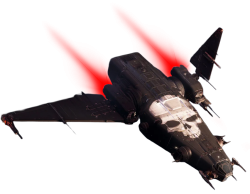

The moment Sibylla broke away from UEE channels, every one of our crews was classified as criminal by the Empire. As a result, any action conducted within Imperial territory became illegal. Despite the considerable autonomy built before the launch of Operation Sibylla, full independence remained unattainable.
Today, as a Corporation, we retain a non-conventional, compartmentalized operational capability—with plausible deniability.
History
To limit information leaks and specialize crews operating in Imperial territory, all “UEE-side” actions were consolidated under a single branch. Within this framework, Task Force 113 reinforced the procurement network (new supplies) and the intelligence backbone required for the fleet’s survival.
Operation Vulture (Spyder): seizure and exploitation of major hulks in the Spyder scrapyard, enabling the refit of entire sections across multiple capital ships and the multi-year stockpiling of spare parts.
Member exfiltration: organizing escapes and routing personnel out of UEE space after captures during resupply runs to outposts believed to be secure.
The “outlaw” period: routine smuggling missions (discreet logistics), punctuated by sensor suppression and disruption of hostile assets used against us. While UEE surveillance satellites were the primary targets, a few officials determined to see us destroyed suffered “accidents” or sudden shifts in direction following the acquisition of sensitive information.
Imperial amnesty—and the legitimization of comparable private security actors—did not end these capabilities. Instead, it broadened our spectrum of action, now integrated into the governance of Sibylla Corporation.


Current Doctrine
Purpose: protect Sibylla’s strategic interests and the safety of its members, without compromising our relations with the UEE—or with Humanity.
Employment Model
- Authority: only a non-conventional operation order validated by the Board of Directors.
- Compartmentalization: compartmented teams, masked identities, encrypted channels, and a logistics chain kept separate from other sectors.
- Plausible deniability: every operation is designed to be dissociable from the rest of the Corporation in the event of a diplomatic incident. All covert missions serve Sibylla’s interests, including disruption actions against enemies of Humanity.
Internal traceability: sealed records of decisions and approvals.
Action Typology
- Discreet logistics (formerly “smuggling”): sensitive deliveries, critical parts, rare extracts, medical supplies.
- Intelligence & sensor neutralization: Com Arrays and detection networks that hinder an exfiltration or put a Sibylla fleet at risk.
- Exfiltration & recovery: personnel extraction, recovery of seized assets, securing of evidence.
- Decoys & diversion: screening operations in support of a lawful primary mission (trade, exploration, R&D).
Member Area
This space supports the secure sharing of discreet logistics routes, the mapping of unlisted service points, and connections with operators able to disable a Com Array, create a diversion, or organize an extraction in accordance with protocol.
In addition, a “Redacted” channel provides support for:
procedures to secure release from detention following actions taken at the edge of legality,
compliance assistance (risk assessment, ship traceability, etc.).
Occasional activities—calibrated for experienced profiles—are also offered. They may require overlooking a few administrative details… in service of the Corporation’s overall security.